
If you’re wondering how to prepare for a VI chemical peel treatment, proper pre-peel care is essential for safe results, even peeling, and faster recovery.Right from the start: good preparation makes the difference. A peel done without prep can irritate your skin or give uneven results. But if you prepare correctly, you improve safety, results, and healing.
This guide tells you exactly what to do before a VI Peel treatment. Follow these steps.
What Is VI Peel — Short Reminder
- VI Peel is a medium-depth chemical peel.
- It uses a special mix of acids and compounds: trichloroacetic acid, phenol, salicylic acid, vitamin C and other agents.
- It works by removing the top skin layers and reaching deeper layers to promote new skin growth, renew collagen, and improve skin tone and texture.
- Because it penetrates deeper than mild peels, the skin must be in a calm, healthy state before treatment. That’s why preparation is so important.
Why You Should Care About Prep
If you skip prep, you risk:
- uneven peeling
- skin irritation or burning
- prolonged redness or pigment changes (dark or light patches)
- slower healing
But when you prep well, you lay the foundation for:
- smoother, even peeling
- better results in tone and texture
- faster, safer recovery
What to Do 2–4 Weeks Before
Start calming and strengthening your skin.
- Cleanse with a gentle, non-irritating cleanser.
- Use a simple, gentle moisturizer if your skin tends to dry.
- Apply broad-spectrum sunscreen daily (SPF 30 or above). Even if indoors.
These steps help stabilize your skin barrier.
If you have pigment issues (dark spots, melasma, uneven tone):
Many experts recommend a skin-priming phase before a medium peel. That can include gentle brightening creams or melanin-inhibitors under medical supervision.
Priming helps the peel penetrate more evenly. It also reduces risk of uneven pigment after healing.
What to Stop 5–7 Days Before
You must avoid “active” skincare. These make your skin more sensitive.
Stop using:
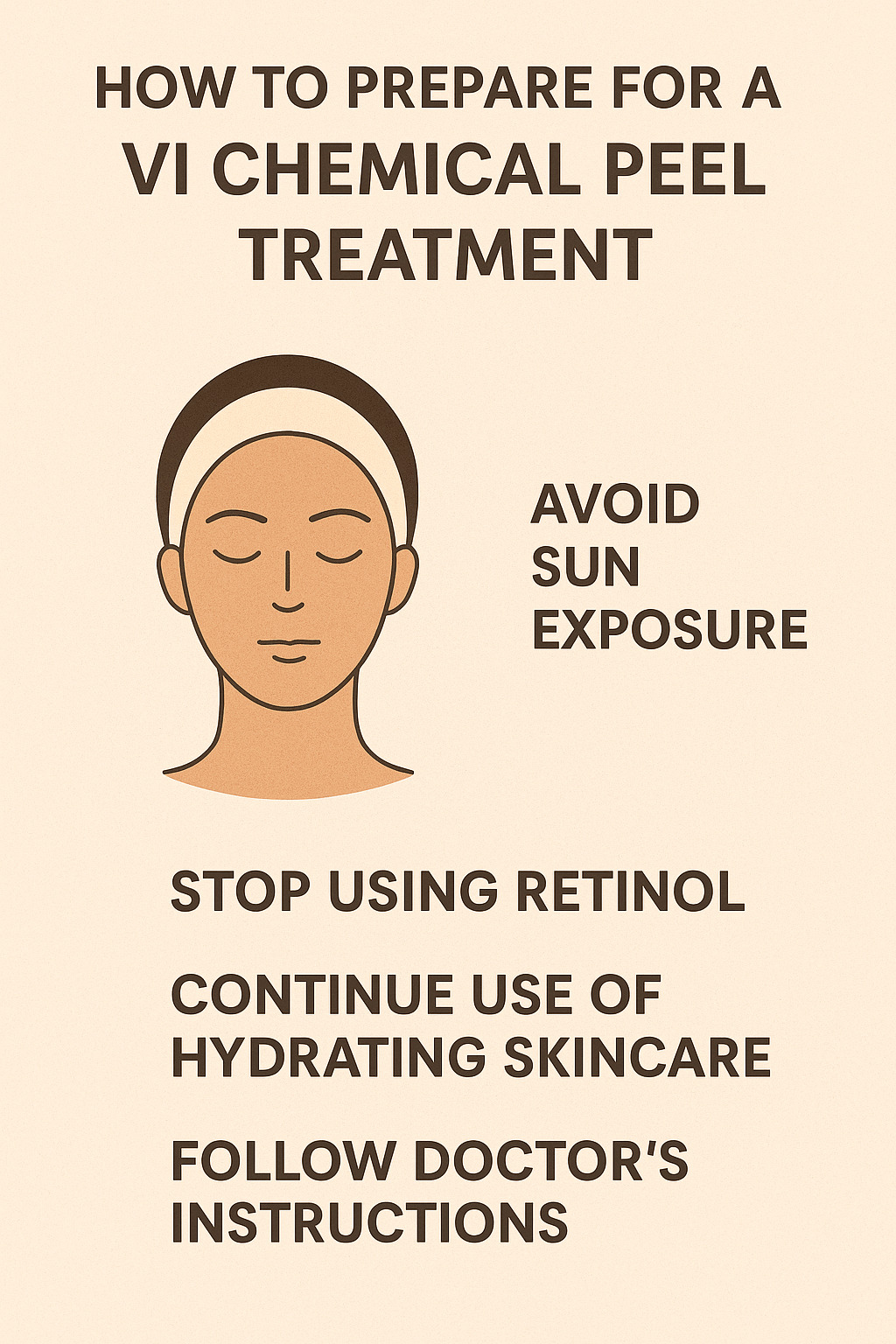
- Retinoids (retinol, tretinoin, vitamin A creams)
- Products with AHAs or BHAs (like glycolic acid, lactic acid, salicylic acid) or other exfoliants.
- Benzoyl peroxide, strong vitamin C serums, or any aggressive actives
- Scrubs, exfoliating tools, rough masks — skip all mechanical exfoliation or scrubbing.
This “cool-down” avoids over-exfoliation and reduces the risk of irritation during the peel.
If you have had or are using acne medication (especially strong ones) — inform your provider. Some medications (like isotretinoin) can change how your skin heals.
What to Avoid 1–2 Weeks Before
To minimize risk, avoid anything that can stress your skin:
- Don’t book waxing, threading, shaving, bleaching, or other hair removal on the treatment area. This includes depilatory creams.
- Avoid other skin treatments: microdermabrasion, laser, IPL, other chemical peels, or skin needling.
- Stay out of tanning beds or avoid intentional tanning. Don’t overexpose skin to sun.
The goal: arrive at your peel session with skin that is calm, uninjured, and without recent stress.
What to Do Day Before / Day Of Treatment
The simpler your skin, the better.
- Cleanse gently. Don’t use makeup, heavy skincare, or SPF the morning of the peel — your provider will clean the skin thoroughly before applying the peel.
- Don’t do any hair removal on the face that day (trauma to skin can worsen sensitivity).
- Don’t schedule intense workouts, saunas, steam rooms, or anything that raises body heat significantly before or right after. Heat increases risk of complications or uneven peeling.
- Stay hydrated — drink water, moisturize gently, and avoid anything drying on skin.
When you arrive for your peel — skin should be clean, calm, simple.
Share Full History With Your Provider
Before your peel, tell your provider about:
- Any history of acne medications (like isotretinoin) or antibiotics.
- Any history of cold sores or herpes simplex (active or prior). Some providers may recommend antiviral prevention.
- All skin treatments or cosmetic procedures you had in recent months (lasers, injectables, other peels, etc.)
- Any skin sensitivities, allergies, or skin conditions (eczema, dermatitis, frequent scarring).
This information helps them tailor the peel (strength, timing, after-care) and avoid complications.
Why This Prep Matters: The Science & Facts
- A chemical peel’s effects depend heavily on how evenly it penetrates and how the skin responds. If skin is inflamed, irritated, or compromised — the peel may “overreact.” That can lead to uneven results, pigment changes, or longer healing.
- Priming skin (calming, moisturizing, protecting from sun, avoiding irritants) helps the peel work more evenly. Many dermatology sources suggest 2–4 weeks of controlled skin care before a medium-depth peel.
- Avoiding retinoids, acids, exfoliants helps reduce risk of over-exfoliation. Over-exfoliated skin plus chemical peel = increased risk of burns, sensitivity, long recovery.
- Avoiding sun exposure before peel reduces risk of post-inflammatory pigment problems. Sun-damaged, tanned, or inflamed skin is more reactive and vulnerable.
In short: a peel doesn’t just depend on the peel solution. It depends on skin readiness.
Special Considerations: Who Should Be Extra Careful
If you fall into one of these categories — talk with your provider and consider alternatives or extra precautions:
- You have darker skin tone. Medium-depth peels carry a higher risk of hyperpigmentation in darker skin.
- You have sensitive skin, eczema, rosacea, dermatitis, or previous scarring issues.
- You have active skin infections, cold sores, open wounds — wait until fully healed before peeling.
- You are pregnant or nursing (many providers recommend postponing), or on medications like isotretinoin.
Your Role in This Treatment — It’s a Partnership
At Rhema Aesthetics & Wellness (led by Aloni Le, DNP, ARNP, FNP-C), we believe in a patient-first, personalized approach.
If you choose VI Peel with us, prepare to play an active role. Before treatment, we will:
- Review your full skin history (medications, procedures, skin sensitivity)
- Help you build a custom skin-prep plan matched to your skin type and concerns
- Guide you through pre-peel care — what to stop, what to protect, how to prime
- Explain clearly what to expect on treatment day and how to care for skin afterward
Your cooperation makes the difference between “just okay” results and “glowy, even, refreshed skin.”
Quick Pre-Peel Checklist for You
| When | What to Do / Not Do |
| 2–4 weeks out | Use gentle cleanser + moisturizer. Daily SPF. Begin brightening/primer (if recommended). |
| 5–7 days before | Stop retinoids, AHAs/BHAs, exfoliants, aggressive serums, harsh cleansers. |
| 1–2 weeks before | Avoid waxing, bleaching, shaving; avoid tanning or sunburn; skip lasers/other treatments. |
| Day before / day of | Cleanse gently, skip makeup and heavy skincare; arrive with clean, dry skin. |
| Always | Disclose full skin, medication, treatment history to your provider. |
Use this as a personal pre-peel roadmap.
Let the Peel Work For You
A VI Peel can bring real improvements — smoother skin, even tone, renewed glow. But it’s not a magic wand. Success depends on preparation and care. A well-prepared peel is a safer peel. A well-healed peel reveals brighter, healthier skin.