
Hair loss is common. It affects men, women, and even young adults. For many people, hair loss can lower confidence and cause stress. The good news is that modern hair restoration options can help.
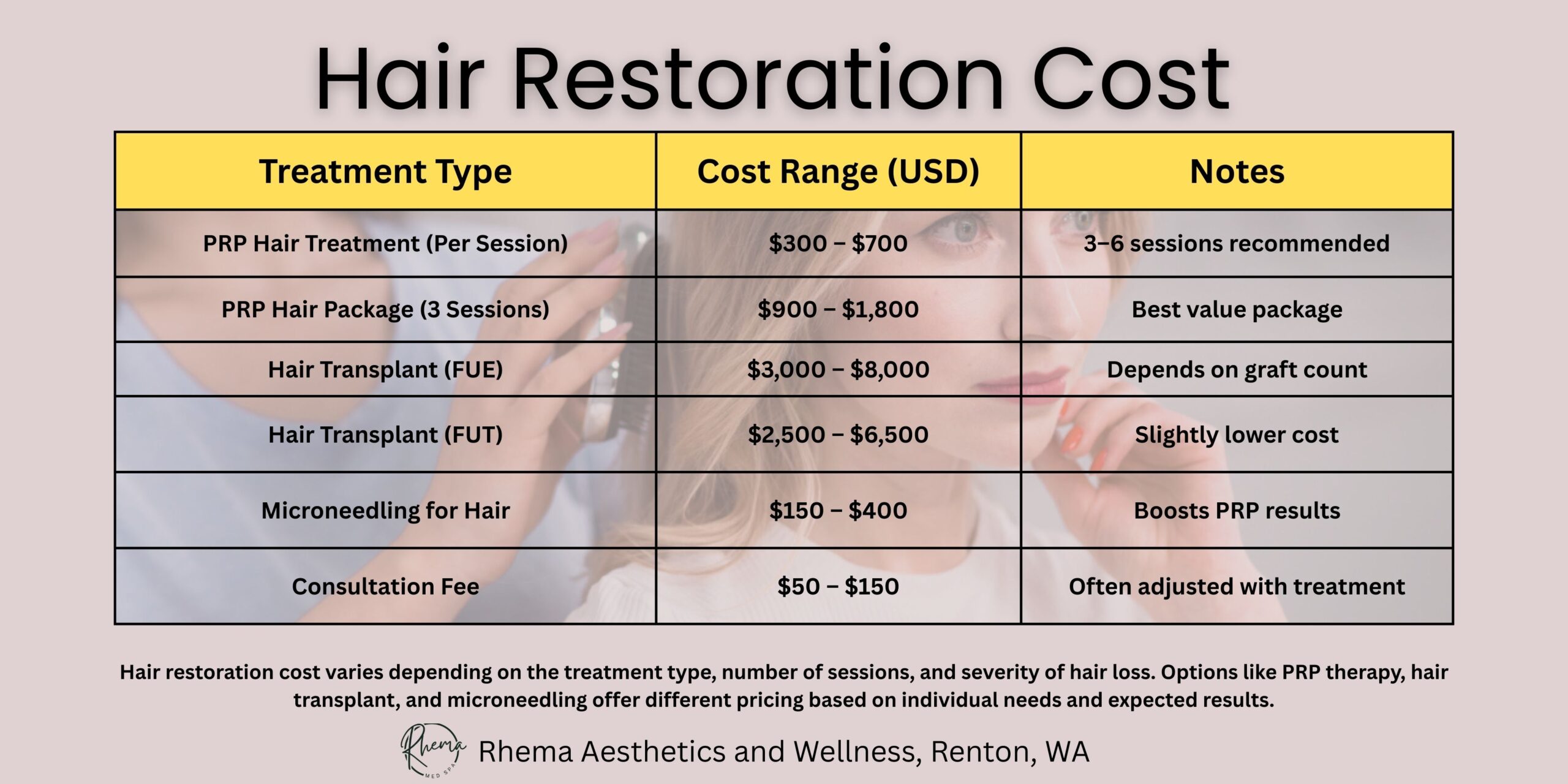
One of the most common questions people ask is simple: How much does hair restoration cost?
The answer is not the same for everyone. Hair restoration cost depends on many factors.
In this guide, we explain those factors in easy words. This article is written for a general audience, including both adults and children.
What Is Hair Restoration?
Hair restoration is any treatment that helps regrow hair or reduce hair loss. It can be medical or cosmetic. Some treatments are non-surgical. Others are surgical.
According to the American Academy of Dermatology, hair loss can happen due to genetics, stress, illness, hormones, or aging.
Average Hair Restoration Cost by Treatment Type
Let’s look at general price ranges. These are estimates.
PRP Hair Restoration
- Average cost per session: $500–$1,500
- Multiple sessions are usually needed
A study in Aesthetic Plastic Surgery found PRP effective for certain types of hair loss.
Hair Transplant Surgery
- Average cost: $4,000–$15,000
- Usually, a one-time procedure
The ISHRS reports that hair transplants are effective but should be done by trained professionals only.
Medications
- Monthly cost: $20–$100
- Long-term use required
FDA-approved treatments like minoxidil and finasteride have shown proven results.
Laser Hair Therapy
- Cost: $200–$3,000 per year
- Often used with other treatments
Research in Lasers in Surgery and Medicine supports its safety for some patients.
Main Factors That Affect Hair Restoration Cost
Hair restoration costs can vary widely. Some people spend a few hundred dollars. Others may spend several thousand. Let’s look at the key reasons why prices differ.
1. Type of Hair Restoration Treatment
This is the biggest factor. Different treatments have different costs.
Non-surgical options usually cost less. These include:
- PRP therapy
- Prescription medications
- Laser treatments
Surgical options, like hair transplants, cost more. They require doctors, equipment, and recovery time.
A study published in the Journal of Cutaneous and Aesthetic Surgery confirms that non-surgical treatments are often more affordable upfront but may require ongoing sessions.
2. Severity of Hair Loss
The amount of hair loss matters. Small areas cost less to treat. Larger areas cost more.
If hair loss is mild, fewer sessions may be needed. If hair loss is advanced, treatment becomes more complex.
According to the International Society of Hair Restoration Surgery (ISHRS), early treatment often reduces total cost over time.
3. Number of Sessions Required
Many treatments are not one-time solutions. They require multiple sessions.
For example:
- PRP therapy may need 3–6 sessions
- Laser therapy may require monthly visits
- Medications are often ongoing
Each session adds to the total hair restoration cost.
A clinical review in Dermatologic Surgery shows that consistent treatment leads to better results but increases long-term cost.
4. Location and Provider Experience
Where you live also affects cost. Clinics in larger cities often charge more. Experience also matters.
Licensed professionals with advanced training may charge higher fees. However, they often deliver safer and more effective results.
The U.S. Bureau of Labor Statistics confirms that healthcare pricing varies by region and expertise.
Conclusion
Hair restoration cost depends on treatment type, hair loss level, session count, and provider experience. Non-surgical options cost less at first. Surgical options cost more but may offer permanent results.
Research shows that early treatment improves outcomes and may reduce long-term expenses. Trusted providers and evidence-based treatments matter most.
If you are exploring options in Washington, many people consider Rhema Aesthetics and Wellness in Renton for professional hair restoration services. We simply guide readers to explore this option based on reputation and patient trust.
Contact us today to learn more and take the next step toward restoring your confidence and hair health.